
- Home
- Training
Training and capacity building
Road safety, rail and policy courses for government officials and engineers across the region.
Road safety engineering and road safety audit
The Ministry of Road Transport and Highways entrusted the institute with its World Bank-funded road safety capacity-building projects under the National Highways Interconnectivity Improvement Project. The institute developed the curricula and training materials and has trained more than 3,600 road professionals in road safety engineering and road safety audit.
Courses are delivered through the IITs, NITs and other research and educational institutions as regional centres, with the institute coordinating faculty, materials and assessment. The Business Standard reported in 2021 that this exceeds the number of road engineers trained by other organisations in India over the preceding ten years.
Auditor accreditation
The institute designed a system for accrediting road safety auditors, the first of its kind in India, and has since developed and implemented it. Participants who complete the audit course sit an accreditation assessment.
Public awareness
Alongside training, the institute developed a strategy for public awareness campaigns on road safety for the ministry.
How to nominate
Nominations are routed through the Ministry of Road Transport and Highways using the standard trainee information format. Candidates carry a valid office identity card to the training centre. For the current schedule, write to asianinstitute.del@gmail.com.
Regional road safety work
- With UNESCAP, the institute is improving the driving licence system of the Lao People's Democratic Republic, financed by the UN Road Safety Fund.
- With the Asian Development Bank and the ministry, it convened a regional conference on safe mobility and regional connectivity in the SASEC sub-region, which recommended that the institute start road safety training for SASEC countries.
- With UNESCAP, it held a regional road safety seminar at which country representatives asked for similar regional courses.
- Under a World Bank contract, it is carrying out a safety assessment of the major road network of Himachal Pradesh using the iRAP methodology.
Sources: statements by the institute to the UNESCAP Committee on Transport, sixth session, November 2020 and seventh session, November 2022.
IndiaRAP
The India Road Assessment Programme is a locally led programme, hosted on the institute's campus since 2017, that star-rates roads for the safety they provide to vehicle occupants, motorcyclists, cyclists and pedestrians on the iRAP one-to-five scale, and prepares safer-road investment plans with national and state agencies. Its vision is an India free of high-risk roads.
IndiaRAP was launched by Nitin Gadkari, Minister for Road Transport and Highways, at the 98th IRF World Road Meeting in Delhi on 14 and 15 November 2017, with FedEx Express as founding sponsor. At launch, 12,000 km had been assessed across twelve states and 5,000 km were under assessment on the Golden Quadrilateral. Technical partners include the Indian Roads Congress, the ministry, NHAI, the IITs, CRRI, the Indian Academy of Highway Engineers and FIA; project assessments have been supported by the World Bank Global Road Safety Facility.
The hosting agreement with iRAP was signed in August 2017 and renewed on 17 August 2020 by K. L. Thapar, then Chairman of the institute, and Rob McInerney, Chief Executive of iRAP. It was renewed again in December 2025 by B. N. Puri, Director, and Greg Smith, Chief Executive of iRAP, to make IndiaRAP part of the institute's mandate as a national road safety resource centre (iRAP announcement).
By September 2026 IndiaRAP had assessed more than 61,000 km of roads and road designs, influenced an estimated US$6.3 billion of road investment and trained more than 9,000 people at workshops in India (iRAP, September 2026).
"IndiaRAP's vision is for an India free of high-risk roads." K. L. Thapar, Chairman, at the launch.
iRAP announcement of the 2020 agreement
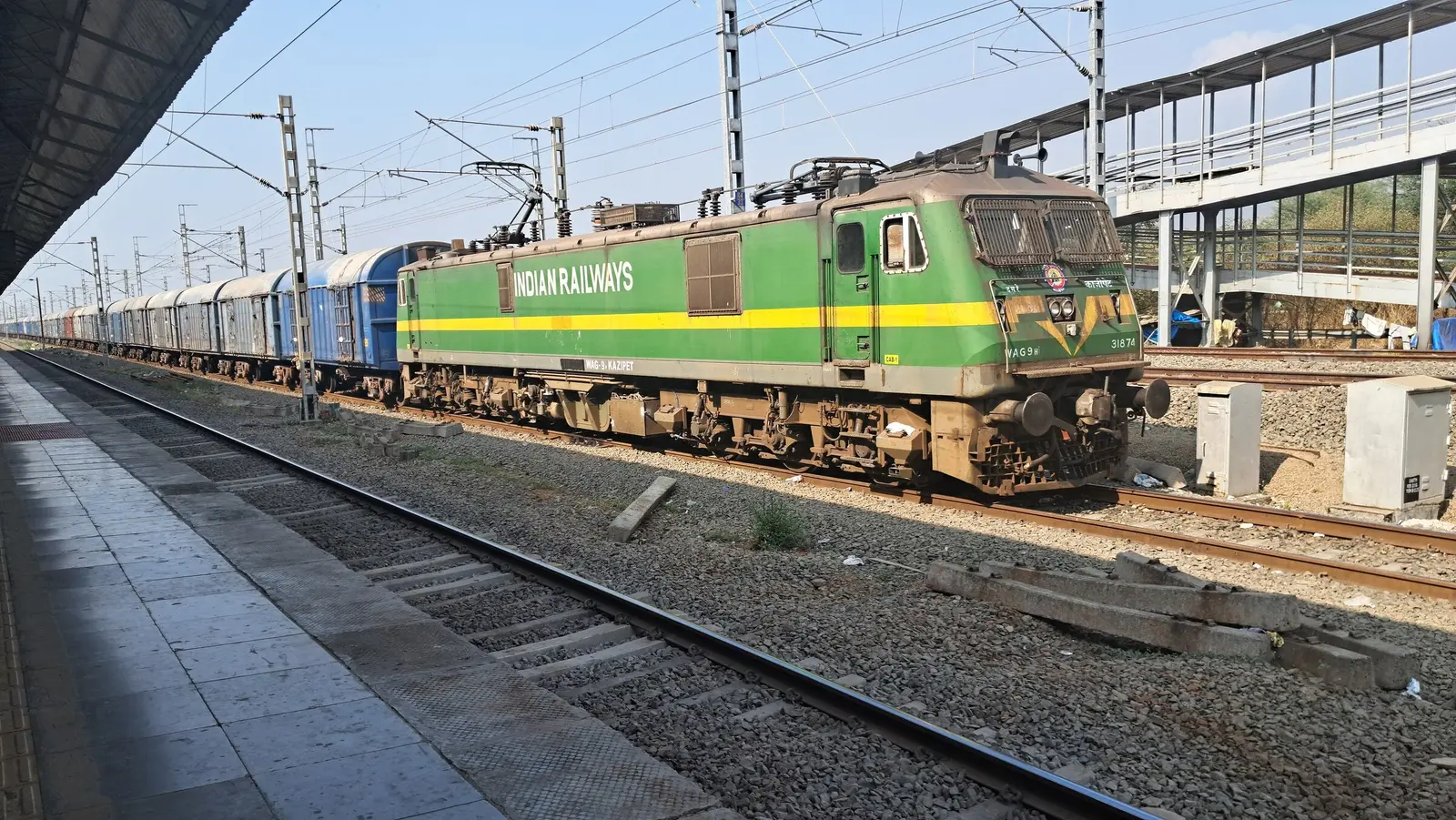
Rail sector training
"The Conference noted with appreciation the valuable role of the Asian Institute of Transport Development in arranging courses for railway personnel from South and South-East Asia to assist in the development of the Trans-Asian Railways network."
Ministerial Conference on Transport, Busan, Republic of Korea
At the first meeting of chief executives of railways of BIMSTEC countries, held in New Delhi in September 2004 and jointly organised with the Ministry of Railways, member countries agreed to pool regional training resources. Indian Railways offered to train railway personnel from member countries free of cost, with AITD coordinating. Twenty-one courses have been completed under the programme, drawing participants from Bangladesh, Bhutan, India, Myanmar, Nepal, Sri Lanka and Thailand.
| Course | Topic | Date |
|---|---|---|
| 21st | Operational Practices for Carriage of Freight Traffic on Railways | Feb 2017 |
| 20th | Trans-Asian Network and Connectivity | Sep 2016 |
| 19th | Integrated Transport and Logistics | Mar 2016 |
| 18th | ICT on Railways and the Financial and Productivity Gains Therefrom | Oct 2015 |
| 17th | Intermodal Choices: Role of Railways | Sep 2014 |
| 16th | Costing and Pricing of Rail Transport Services | Feb 2014 |
| 15th | Development of Dry Ports | Nov 2013 |
| 14th | Public Private Partnership | Mar 2013 |
| 13th | Information Technology and its Application on Railways | Nov 2011 |
| 12th | Preservation of Railway Heritage | Dec 2010 |
| 11th | Development of Rail Infrastructure: Financing and Project Management | Feb 2010 |
| 10th | Maintenance of Diesel Locomotives | Mar 2009 |
| 9th | Developing Bankable PPP Projects for Infrastructure Development | Nov 2008 |
| 8th | Design and Maintenance of Passenger Coaches | Sep 2008 |
| 7th | Passenger Coach Designs and their Maintenance | Feb 2008 |
| 6th | PPP in the Development of Rail Infrastructure | Apr 2007 |
| 5th | Information Technology and its Application on Railways | Dec 2006 |
| 4th and 3rd | Trans-Asian Railway Network in Member Countries | Aug 2006, Apr 2006 |
| 2nd | Resource Mobilisation and Financial Management in the Railways | Aug 2005 |
| 1st | Multimodal Transport | Apr 2005 |
Road sector training
A course on Transport Policy and Planning Framework was delivered for engineers of the Bihar Rural Works Department. It gave participants an overview of the principles governing transport policy and planning across modes, addressed transparency and governance in rural road projects at state level, and covered climate-resilient and environmentally optimised design alongside rural road safety.
Course papers
- Ethics, Transparency and Governance, Sanjay Kothari, Secretary, DoPT
- Modes of Transport and Integrated Sustainable Transport, B.N. Puri, AITD
- Traffic Safety: Current Status and Way Forward, Prof. Geetam Tiwari, TRIPP, IIT Delhi
- Railway Overview, D.P. Pande, Member Traffic, Railway Board
- Financing and Financial Appraisal, Dr. Manoj Singh, Adviser (Transport), NITI Aayog
- Roads and Road Transport: Overview and Current Initiatives, D.P. Gupta, AITD
- Rural Roads, I.K. Pateriya, Director (Technical), NRRDA
- Other Modes of Transport: Water Transport, M. Ramachandran, Secretary, MoUD
Seminars and conferences
| Topic | Date |
|---|---|
| Regional Policy Dialogue on Transport Connectivity in Southern Asia | Nov 2014 |
| Roundtable on the Economics of Investment in High Speed Rail | Dec 2013 |
| Regional Consultation Meeting on Curriculum Development for PPP Training | Mar 2011 |
| Regional Meeting of PPP Units and Programmes | Feb 2011 |
| Regional Workshop and Study Visit on Developing Bankable PPP Projects | Nov 2008 |
| Connectivity Issues in India's Neighbourhood: Economic and Strategic Implications | May 2008 |
| Subregional Workshop on the Development of Intermodal Interfaces | Dec 2007 |
| Subregional Workshop on Investment Needs for the Trans-Asian Railway Network | Dec 2007 |
| Regional Seminar on Intermodal Logistics | Oct 2007 |
| Seminar on High Speed Corridors on Indian Railways | May 2007 |
| ANTLER Conference: UNESCAP/AITD Conference on Transport and the MDGs | Apr 2005 |
Bilateral dialogues
India and Bangladesh (October 2009 and October 2012) and India and Sri Lanka (October 2010).
Meetings of chief executives of railways of BIMSTEC countries
AITD serves as secretariat for this forum, which it helped establish. Seven meetings have been held: New Delhi (March 2013), New Delhi (March 2010), Ha Long, Vietnam (December 2008), Bangkok (December 2007), Colombo (December 2006), Yangon (December 2005) and New Delhi (September 2004).
Internship programme
The programme engages students pursuing graduate or postgraduate degrees, and research scholars enrolled at recognised universities in India or abroad. Interns take up an assignment on a transport topic of their own choosing and contribute to the institute's research and analysis, gaining exposure to the sector across policy, economics and logistics.
Who can apply
Anyone pursuing a graduate or postgraduate degree, or enrolled as a research scholar at a recognised university or institution in India or abroad.
How to apply
The internship is available throughout the year. Apply by email to the Deputy Secretary of the institute at asianinstitute.del@gmail.com.