
- Home
- About
About the institute
An independent, not-for-profit centre for transport research, policy and capacity building since 1989.
Overview
The Asian Institute of Transport Development is devoted to capacity building, non-partisan research and regional cooperation in the infrastructure sector, with a special focus on transport, trade and logistics.
The institute aims to promote balanced, efficient, equitable and sustainable development. It fosters regional cooperation and partnership, promotes human resource development and works towards harmonisation of technologies to enhance welfare across the region.
The United Nations Economic and Social Council granted AITD special consultative status in 2002. The status is awarded to non-governmental organisations with recognised expertise and standing in their field, and the capacity to assist the work of the United Nations. The Government of India has drawn on the institute's advice while formulating national plans and long-term policy frameworks for transport and logistics, and has inducted its senior faculty into high-level committees and working groups.
Three senior faculty members served on the National Transport Development Policy Committee, whose report India Transport Report: Moving India to 2032 was submitted in 2014.
Recognition
In November 2021 the Indian Institute of Public Administration conferred its Award for Excellence in Public Services on the institute, at a ceremony presided over by the Vice President of India, M. Venkaiah Naidu. The award cited the institute's record in road safety training, where it has trained more than 3,600 professionals under World Bank-funded projects, and its regional rail training with the Ministry of Railways.
Genesis
In developing Asia the need was felt for an institution that could focus on the transport sector in its entirety: organise systematic research, undertake project studies and promote regional cooperation in expertise, technologies, facilities and logistics. High-level committees emphasised the need for such an institution, one that could help lay down a conceptual edifice for the development of transportation systems at national and regional levels, meeting the community's requirements at minimum social and economic cost.
"A review of existing training and research facilities in the field of transport shows that transport studies have been comparatively neglected. There is no institution which can impart training to look after the transport system as a whole and plan for its future development in a coordinated framework, or undertake studies in transport problems from a common outlook and approach."
Through the 1980s it was increasingly felt that an inter-disciplinary centre should be set up to stimulate, sponsor and undertake research, and to conduct training in transport planning and management — structured as an autonomous institution so that objectivity in its work, and its mandate to promote regional cooperation, would both be secured. That thinking crystallised in the founding of AITD in 1989.
Objectives
The institute aims at balanced and sustainable development of the transport sector, taking account of environmental implications and the optimal use of physical and financial resources. It also works towards rational inter-country transport linkages for the economic growth of the region. Its broad objectives are:
- To sponsor, promote and coordinate studies and research in transport policy, inter-modal systems and related areas.
- To promote management and operational efficiency of transport services.
- To organise appropriate training programmes at both institutional and individual levels.
- To foster regional cooperation in the transport sector.
Work across modes
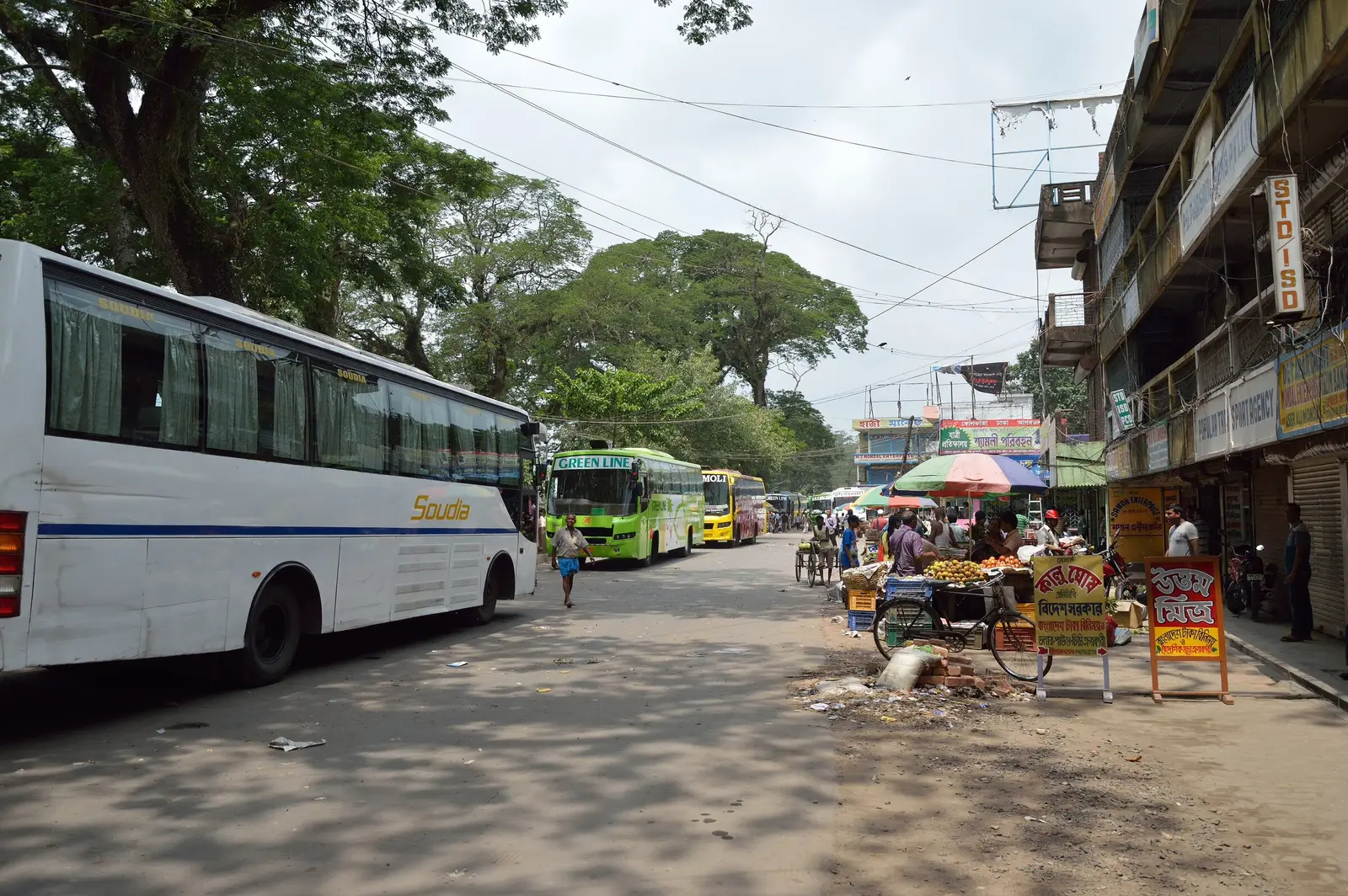
Studies in the road sector include optimisation of axle loads of commercial vehicles, establishment of transhipment hubs, the socio-economic impact of national highways, and transport facilitation between India and Nepal and between India and Bangladesh for BIMSTEC. The institute drafted the initial agreement for the movement of vehicles among South Asian countries for the SAARC Chamber of Commerce. It has also carried out studies on transport facilitation identifying bottlenecks to seamless land transport in South Asia, and research across all modes.
Regional cooperation
The institute has taken several initiatives to promote regional cooperation. It led the effort that resulted in a Forum of Chief Executives of Railways, the establishment of the Asian Railway Association in 2006, the launch of a regional training programme, and the extension of its research facilities for common use.
- AITD functions as the secretariat of the Asian Railway Association, set up to synergise the region's rail systems so that goods and people can move seamlessly.
- With the Ministry of Railways, its outreach programmes have trained more than 800 senior professionals from fourteen countries in South and South-East Asia over eighteen years, at no charge to participants (statement to UNESCAP, 2024), covering technical, social, financial and multimodal aspects of infrastructure.
- It has carried out studies on transport facilitation identifying bottlenecks to seamless land transport in South Asia, and research across all modes of transport.
Association
The institute has memoranda of understanding with the following organisations. Each agreement is published in full.
| Organisation | Agreement |
|---|---|
| IRU, International Road Transport Union | MoU |
| UNESCAP, United Nations Economic and Social Commission for Asia and the Pacific | MoU |
| UIC, International Union of Railways | MoU |
| NCAER, National Council of Applied Economic Research | MoU |
| CRIS, Centre for Railway Information Systems | MoU |
| CONCOR, Container Corporation of India | MoU |
| NHAI, National Highways Authority of India | MoU |
| iRAP, International Road Assessment Programme | Hosting agreement for IndiaRAP, signed August 2017, renewed 17 August 2020 (iRAP announcement) and again in December 2025 (iRAP announcement) |
Regional groupings
The institute has strong linkages with regional organisations across South, South-West and South-East Asia, and provides substantive support to SAARC, BIMSTEC, Mekong–Ganga Cooperation, ECO, GMS and ASEAN in skill development.
Academic and training infrastructure
The institute has its own campus in Sector 9, Dwarka, New Delhi, on a 100-foot wide sector road facing an extensive district park. It is close to the international airport and well connected with the rest of the city. The first phase has been developed on a two-hectare plot and comprises teaching and administrative blocks, a library, conference room, auditorium and a modern IT centre. A second phase, providing a 90-room hostel for scholars and visiting faculty, is to be undertaken.





Library
The library is endowed with rich research resources in transportation and transport economics; the compilation of research material on the sector over the years has produced a substantial resource centre. It houses more than 2,500 books on economics, transport, energy, philosophy and literature, along with reports and studies on transport. Collections cover roads and road transport, transport planning, rail transport, shipping and inland navigation, aviation and logistics, with further sections on trade and transport facilitation and on regional cooperation.
Auditorium
Seats over 100 people and is equipped with high-end audio-visual machinery, used for seminars, training programmes and workshops.
Conference room
Seats over 60 people and is used for conferences, seminars, training and other events.